
In the rapidly digitizing ecosystem of Pakistan, your thirteen-digit Computerized National Identity Card (CNIC) number has transcended its physical form. It is no longer merely a card in your wallet; it is the foundational key to your existence in the digital realm. From opening a bank account and applying for a passport to receiving government subsidies and logging into your favorite shopping app, the CNIC is the universal authenticator. And tethered to this critical identifier are your mobile phone numbers—the Silent Sentinels of your digital life. They receive one-time passwords (OTPs), verification codes, and transaction alerts. This profound connection between your identity and your telecom footprint makes the management and verification of SIM Ownership not just important, but absolutely essential for every Pakistani citizen as we advance into 2026.
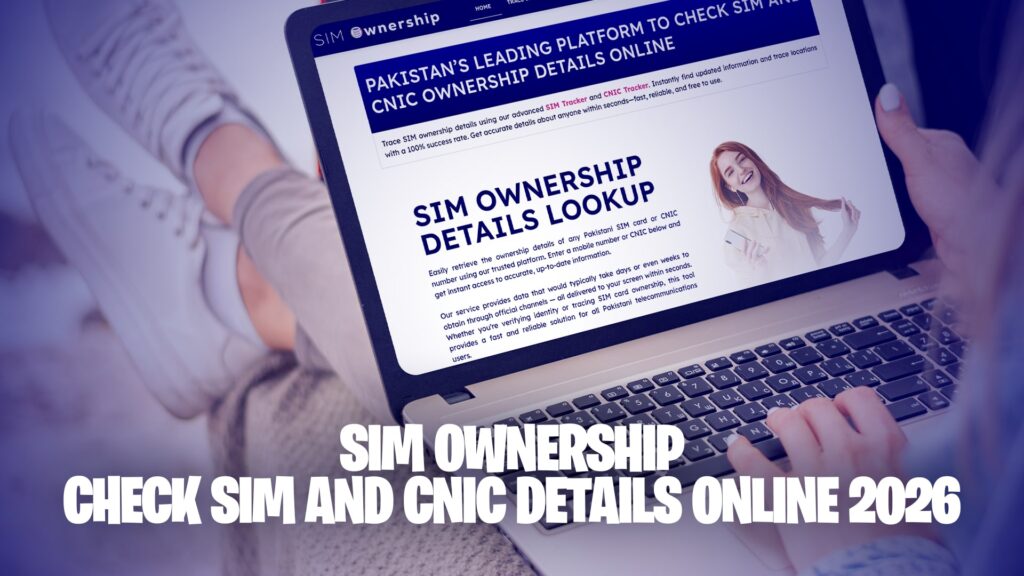
This definitive guide is dedicated to unpacking every facet of SIM Ownership in Pakistan. We will delve deep into the mechanisms, the legal framework, the evolving threats, and most importantly, the practical solutions. At the heart of this discussion is SIM Ownership—Pakistan’s premier, PTA-compliant platform designed to empower you with unparalleled visibility and control over every SIM card registered against your national identity. Whether you are a student getting your first connection, a professional managing multiple numbers, or a senior citizen wary of digital fraud, this guide will equip you with the knowledge to navigate the telecom landscape with confidence and security.
The Digital You – Understanding the Weight of SIM Ownership
What Exactly is SIM Ownership?
At its core, SIM Ownership is the legal and administrative contract that binds a mobile phone number (the Subscriber Identity Module, or SIM) to a specific individual. In Pakistan, this bond is mandated and enforced by the Pakistan Telecommunication Authority (PTA). It dictates that no SIM can be activated or remain operational on any national network without being biometrically verified and formally registered to a valid CNIC. This transforms your mobile number from a simple communication tool into a direct extension of your legal identity within the telecom grid.
The Anatomy of the Link: CNIC, Biometrics, and the Central Database
The process creates a digital trail:
You present your original CNIC at an authorized franchise or sales point.
Your Thumbprint is scanned via a biometric verification system (BVS), which cross-references it with the National Database and Registration Authority (NADRA) records to confirm you are the legitimate holder of the CNIC.
The Link is Forged: The new mobile number, your verified CNIC number, and the transaction details are recorded in a central, secure database maintained by the PTA and accessible to your chosen telecom operator (Jazz, Zong, Telenor, Ufone, etc.).
The Result: You now “own” that SIM. Its activity is legally attributable to you.
Why This Matters More in 2026 Than Ever Before
The integration of telecom with critical services has accelerated. Consider these scenarios:
Financial Inclusion & Fraud: The rise of mobile banking (JazzCash, EasyPaisa) and digital wallets means a SIM is a gateway to your money. A fraudster with a SIM in your name can reset passwords, authorize transactions, and drain accounts.
E-Governance: From applying for Ehsaas programs to filing tax returns, government services are increasingly linked to mobile numbers for verification and communication.
Social & Communication Hub: Your WhatsApp, Facebook, Gmail, and other social accounts are often secured via SMS-based two-factor authentication (2FA). Control the SIM, and you can hijack these accounts.
The 10-SIM Limit: PTA regulations cap individual ownership at 10 SIMs across all operators. Unawareness of this can lead to legitimate service denials if your limit is silently exhausted by fraudulent registrations.
In essence, unchecked SIM ownership is like leaving copies of your house keys with strangers. SIM Ownership, the platform, is the master key registry that lets you see who holds those copies.
A Historical Lens – The Evolution of SIM Registration in Pakistan
To appreciate the current system and the role of verification platforms, one must understand the journey from chaos to control.
The Era of Anonymity (Pre-2009): SIMs were sold over the counter like candy. No credible identification was required, leading to a proliferation of millions of unregistered, untraceable SIMs. This anonymity became a potent tool for criminal activities, extortion, and terrorism.
The First Steps – Manual Registration (2009-2014): PTA mandated CNIC-based registration. However, reliance on photocopies led to widespread forgery. A single CNIC copy could be used to activate hundreds of SIMs without the owner’s knowledge.
The Game Changer – Biometric Verification System (BVS) – 2014: This was the watershed moment. Mandatory live thumbprint verification, matched against NADRA’s database in real-time, slammed the door on bulk fake registrations. It established a one-person, one-verification principle.
Public Empowerment Tools – *8484# and 668: PTA launched the shortcode *8484# (and later the 668 helpline) as a self-service mechanism. For the first time, citizens could check the total number of SIMs registered on their CNIC. This was revolutionary but basic.
The Device Layer – DIRBS (2019): The Device Identification, Registration & Blocking System targeted the other end of the equation: the handset. It blocked stolen, smuggled, or non-compliant phones from connecting to Pakistani networks, disrupting the market for devices used on illegal SIMs.
The Present and Future – Integrated Platforms (2024-2026): This is where advanced, user-centric platforms like SIM Ownership emerge. They build upon the government’s foundational systems but add layers of detail, usability, and proactive security education. The trend is moving from reactive checking to proactive identity management, with platforms offering clearer breakdowns, historical tracking, and seamless integration with official complaint mechanisms.
Introducing Your Digital Shield – The SIM Ownership Platform
SIM Ownership is not merely a website; it is a dedicated security portal conceptualized for the modern Pakistani citizen. It operates as a sophisticated intermediary, bridging the gap between the complex, backend PTA databases and the everyday user who needs simple, actionable information.
Core Philosophy: Empowerment Through Transparency
The platform is founded on a simple belief: you have a right to know what is attached to your identity. Its mission is to convert opaque telecom data into clear, understandable insights that enable informed action.
What Makes SIM Ownership Pakistan’s Leading Platform?
PTA-Compliant and Legitimate: It operates strictly within the legal and regulatory framework established by the PTA. It does not hack, scrape, or illegally access data. It utilizes approved channels to fetch information that citizens are entitled to.
Beyond the Basics – From Count to Detail: While *8484# gives you a number (e.g., “5 SIMs registered”), SIM Ownership strives to provide a breakdown. This can include which of those 5 numbers belong to which operator, offering a starting point for investigation if fraud is suspected.
Dual-Function Tracker: It seamlessly serves as both a CNIC tracker (input your CNIC to get a list of numbers) and a SIM tracker (investigate the registration details of a specific number in your possession).
User-Centric Design: The interface is built for clarity, guiding users step-by-step, minimizing confusion, and presenting results in an easily readable format.
An Educational Beacon: The platform houses guides, articles, and FAQs (like this comprehensive piece) that build public awareness about telecom security, fraud prevention, and digital rights.
Addressing the Trust Factor: Security and Privacy
A legitimate concern is, “Is it safe to enter my CNIC on this site?”
Data Handling: Reputable platforms like SIM Ownership act as a conduit. Your query is passed securely to authorized data sources, and the result is displayed. The focus is on real-time verification, not on creating a personal data storage warehouse.
Privacy Commitment: A trustworthy platform will have a clear privacy policy stating it does not sell, rent, or misuse your personal data. Its purpose is singular: to provide you with your own information.
Encryption: Secure websites (HTTPS) encrypt data in transit, protecting your CNIC number from being intercepted during the query process.
The Master Guide – How to Check Your SIM and CNIC Details in 2026
Let’s walk through the entire process, from initiation to interpretation, using the SIM Ownership platform.
Phase 1: Preparation and Access
Gather Information: Have your original CNIC card handy. Ensure you know the correct 13-digit number without dashes or spaces.
Secure Connection: Use a private, secure internet connection. Avoid public Wi-Fi for such sensitive queries if possible.
Access the Portal: Open your browser and navigate to the official SIM Ownership website. Bookmark this legitimate site to avoid phishing copies in the future.
Phase 2: Navigating the Platform Interface
Upon landing on the homepage, you will find a clean, focused layout. Key elements include:
Primary Search Bars: Prominently placed fields for entering your CNIC number or a mobile number.
Clear CTAs (Call-to-Action): Buttons labeled “Check Now,” “Verify CNIC,” or “Trace SIM.”
Informational Sections: Links to guides, FAQs, and blog posts about telecom security.
Security Assurances: Logos or text indicating PTA compliance and data security.
Phase 3: Executing a CNIC-Based Search (The Primary Method)
Select the CNIC Tracker Option.
Input Your 13-Digit CNIC Number. Type carefully. Example: 4220112345671.
Complete the Security Challenge. Solve the CAPTCHA (e.g., “Select all squares with traffic lights”). This is a critical step that prevents automated bots from flooding the system.
Submit for Processing. Click the “Check” or “Submit” button.
Phase 4: Deciphering Your Personal SIM Ownership Report
The results page is the moment of truth. A well-structured report may include:
Header Information: Your masked CNIC (e.g., 42201******671) for confirmation.
Summary Box: “Total SIMs Registered: 5”
Detailed Tabular Breakdown:
S. No.: 1, 2, 3…
Mobile Number: 0300-XXXXXXX, 0333-XXXXXXX, etc.
Telecom Operator: The logo or name of the operator (Jazz, Zong, etc.).
Registration Status: Active / Inactive.
Additional Notes: Sometimes, the type of connection (Prepaid/Postpaid) might be indicated.
Last Updated Note: A timestamp indicating when the data was refreshed, highlighting it is near real-time.
Phase 5: Executing a SIM-Based Trace
If you have a specific number whose ownership you wish to confirm (e.g., a number you are being billed for, or one you inherited):
Select the “Trace Number” or “SIM Tracker” option.
Enter the 11-digit mobile number (e.g., 03001234567).
Complete the CAPTCHA.
Submit. The result will confirm the CNIC to which that specific number is registered. This is crucial for verifying family plan connections or corporate numbers assigned to you.
Phase 6: Analysis and Initial Response
Scenario A – All Numbers Recognized: This is the ideal outcome. You have full control. Note the details and consider setting a calendar reminder for your next quarterly check.
Scenario B – One or More Unknown Numbers: This is a red flag. Do not panic. Immediately note down the full unknown number(s) and the corresponding operator(s). This is your evidence.
The Red Flag Protocol – Immediate Actions for Fraudulent SIM Discovery
Finding an unauthorized SIM is a digital security incident. Follow this structured protocol.
Step 1: Immediate Containment (Within the First Hour)
Contact the Operator: Call the customer service helpline of the relevant operator immediately.
Jazz: 111 or 123
Zong: 310
Telenor: 345
Ufone: 333
State Clearly: “I have discovered a SIM number [quote the number] fraudulently registered on my CNIC [quote your CNIC]. I request an immediate permanent block on this number.”
Get a Complaint ID: Do not end the call without obtaining a unique complaint or ticket reference number.
Step 2: Formal Documentation and Blocking (Within 24 Hours)
Visit the Franchise: Go to the nearest customer service center of the operator in question. Take your original CNIC and a copy.
File a Written Complaint: Submit a formal application for the blocking of the fraudulent number. Clearly state you did not purchase or authorize it. Attach a copy of your CNIC.
Obtain Proof: Get a stamped, signed receipt or acknowledgment letter from the operator confirming they have received your complaint and have blocked the number.
Step 3: Escalation to the Regulator (Within 3 Days)
Report to PTA: The PTA is the supreme regulator. File a formal complaint through their official channels:
PTA Complaint Portal: File online on the PTA website.
Email: [email protected]
Helpline: 0800-25688
Provide Details: Include your CNIC, the fraudulent number(s), the operator’s complaint ID, and a scan of the stamped complaint from the franchise.
Step 4: Legal Recourse for Severe Cases (If Needed)
Involve the FIA: If the fraudulent SIM was used for financial loss, blackmail, harassment, or other crimes, file a First Information Report (FIR) at your local police station or directly with the Federal Investigation Agency (FIA) Cyber Crime Wing.
Legal Standing: Your evidence from SIM Ownership, the operator’s complaint, and the PTA report will form a strong legal dossier.
The Fortress – Proactive Strategies to Shield Your CNIC from SIM Fraud
Vigilance is your first and most powerful line of defense. Institutionalize these habits:
The Physical Guard: Your CNIC Card
Treat it Like Cash: Do not carry it unnecessarily. Use a certified copy for routine verifications where possible.
Never Surrender It: Be extremely wary of anyone (shopkeepers, sales agents, etc.) who insists on keeping your original CNIC “for processing.” Stand your ground.
The Biometric Guard: Your Thumbprint
It is a Digital Signature: Treat your live thumbprint scan with the same seriousness as signing a blank check.
Supervise the Process: Watch the agent’s screen during verification. Ensure they are only processing one SIM, not using your thumbprint for multiple activations.
Demand a Receipt: Always get a proper, printed sales receipt with the new number clearly mentioned.
The Digital Hygiene Guard: Your Online Behavior
Beware of Phishing: Never enter your CNIC number on unsolicited emails, SMS links, or suspicious websites promising free prizes or loans.
Secure Storage: If you have a digital copy of your CNIC on your phone or cloud, ensure it is in a password-protected folder.
The Procedural Guard: Your Checking Routine
Schedule Regular Audits: Mark your calendar: check your SIM Ownership status every 3 months. Make it as routine as checking your bank statement.
Pre-Purchase Verification: Before buying a new SIM, do a quick check to see how many you already own. Stay aware of your count relative to the 10-SIM limit.
Family Education: Hold a family meeting. Teach parents, grandparents, and domestic help about these risks. Help them run their own checks periodically.
Demystifying the Technology – How the SIM Ownership Platform Operates
Understanding the “how” builds trust. Let’s peek behind the curtain.
The Data Flow Architecture
User Input: You enter your CNIC on the SIM Ownership platform.
Secure Query Formation: The platform formats this into a secure query, authenticated through official Application Programming Interfaces (APIs) or channels approved for such public service inquiries.
Query to PTA/Operator Systems: This query is sent to the regulated telecom databases (often via secure intermediaries that manage access).
Database Lookup: The central system checks its records for all mobile numbers tagged with your CNIC.
Result Return: The list of numbers (and associated operator data) is sent back through the secure channel.
User-Friendly Presentation: SIM Ownership receives this data and presents it in the clean, formatted report you see on your screen.
The Critical Distinction: Information vs. Surveillance
It is vital to reiterate: SIM Ownership provides registration information, NOT surveillance data.
What it DOES show: Which numbers are linked to a CNIC.
What it DOES NOT and CANNOT show: Live location, call history, SMS content, contact lists, or real-time activity. Accessing such data is a criminal violation of privacy laws and requires a court order for law enforcement. Platforms like SIM Ownership do not have—and cannot have—this capability.
Compliance with Pakistani Law
The platform’s operation is circumscribed by:
The Pakistan Telecommunication (Re-Organization) Act, 1996: Grants PTA its regulatory powers.
PTA Consumer Protection Regulations: Ensure subscribers have rights to information.
Data Protection Considerations: Emerging digital privacy norms guide ethical data handling.
The Horizon – The Future of SIM Verification and Digital Identity (2026 and Beyond)
The trajectory points towards even greater integration and citizen empowerment.
The Vision of a Unified Digital Identity
Your CNIC, driver’s license, passport, and tax number may converge into a single, secure Digital ID. Verified mobile numbers will be a core component of this ID, used for seamless and secure authentication across all government and private services.
Next-Generation Features on Platforms like SIM Ownership
Proactive Alert Systems: Opt-in SMS or email alerts the moment a new SIM is registered to your CNIC.
Integrated Complaint Modules: One-click buttons to forward fraudulent number reports directly to the concerned operator and PTA from within your results page.
Historical Tracking: Graphs showing your SIM count over time, helping you spot suspicious spikes.
Family Management Portals: A secure dashboard for heads of family to oversee the SIM registrations of dependents (with proper consent).
AI-Powered Anomaly Detection: The system could flag registrations from geographically distant locations or unusual patterns as “high-risk” for your review.
The Role of the Citizen in a Secure Digital Pakistan
The government builds the systems, and platforms like SIM Ownership provide the tools. However, the final layer of security is you. An informed, vigilant, and proactive citizenry, routinely auditing its digital footprint, is the strongest defense against identity fraud and telecom-related crimes.
Yes, it is completely legal and safe. SIM Ownership is a PTA-compliant platform designed to help citizens exercise their right to access their own registration data. It uses secure, encrypted channels to protect your information during the query process. It is a tool for transparency, providing you with the same core information you could request through official PTA channels, but in a more user-friendly format.
The legal limit set by the PTA remains a maximum of 10 SIMs across all telecom operators in Pakistan. This total includes both prepaid and postpaid connections from any operator like Jazz, Zong, Telenor, and Ufone. The SIM Ownership platform is crucial for monitoring this limit, as it will show you your exact count and help you identify if fraudulent registrations are pushing you over the legal threshold, which can lead to service denials for legitimate SIM purchases.
You will receive a detailed report listing all active mobile phone numbers (SIMs) registered against your CNIC number. A comprehensive report typically includes the total count, and for each number, details like the full mobile number, the telecom operator it is registered with (e.g., Mobilink Jazz, Zong, etc.), and its registration status (Active/Inactive). This breakdown is far more actionable than just knowing a total number.
No, you cannot trace the ownership of arbitrary or third-party numbers for privacy and legal reasons. The platform is designed to let you check which numbers are registered to your own CNIC. This is a self-verification tool. Tracing the owner of another person’s number without legal authority is a violation of privacy laws. For such requests, law enforcement agencies follow a strict legal protocol.
The first and most immediate step is to contact the customer service helpline of the telecom operator to which the unknown number belongs. Inform them that the SIM is fraudulently registered using your CNIC and request an immediate permanent block. Have your CNIC details and the fraudulent number ready for verification. Do this immediately upon discovery to minimize potential misuse. Then, follow the full protocol outlined in the “Red Flag Protocol” section of this guide.
Conclusion: Your Digital Identity, Your Responsibility
In the interconnected world of 2026, your digital identity is as valuable as your physical one. The SIM cards linked to your CNIC are critical access points to this identity. Ignorance is no longer bliss; it is a vulnerability. The simple, five-minute act of regularly checking your SIM Ownership status is one of the most effective digital hygiene habits you can cultivate.
This guide has provided you with the complete picture—from the “why” to the “how,” and from immediate reaction to long-term prevention. The SIM Ownership platform stands as your dedicated partner in this mission, transforming complex data into clear insights. Take control today. Perform your first check, share this knowledge with your loved ones, and become an active participant in securing not just your own digital future, but contributing to a safer, more secure digital Pakistan. Your vigilance is the ultimate key.